Have you ever woken from a vivid dream feeling like you’ve glimpsed another realm? For centuries, humans have pondered the mysteries of sleep and dreams, often weaving them into ideas about what lies beyond death. While science views dreams as a byproduct of brain activity during sleep, many cultural, religious, and personal experiences suggest a deeper connection to the afterlife. This article explores these intersections, drawing from scientific research, near-death experiences (NDEs), and diverse beliefs around the world.
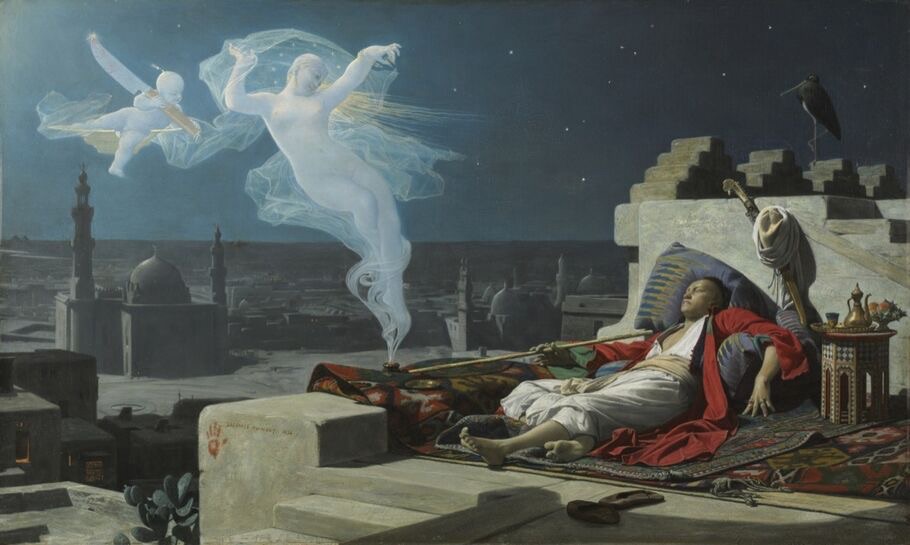
The Science of Sleep and Dreams
Sleep is a complex process divided into stages, including non-rapid eye movement (NREM) and rapid eye movement (REM) sleep. Dreams most commonly occur during REM sleep, when brain activity resembles wakefulness, but the body remains paralyzed to prevent acting out scenarios. 12 This stage is crucial for memory consolidation, emotional processing, and even maintaining body temperature. 14 Scientifically, dreams are explained as the brain’s way of reorganizing memories—shifting them from short-term to long-term storage—or simply as random neural firings without deeper purpose. 9 15
From a neuroscientific perspective, the sleeping brain generates vivid narratives by recombining stored experiences, free from sensory input. 13 Nightmares, often occurring later in the sleep cycle as REM periods lengthen, highlight this intensity. 10 Yet, some theories propose dreams serve evolutionary functions, like strengthening neural connections through emotional simulations.

While these explanations ground dreams in biology, they don’t fully account for why many people report dreams involving deceased loved ones or otherworldly encounters. In hospice care, for instance, patients nearing death experience more dreams about the departed, which some interpret as preparation for the afterlife. 5
Near-Death Experiences: A Bridge Between Dreams and the Beyond?
Near-death experiences offer a compelling overlap between dream states and perceptions of the afterlife. During NDEs—often triggered by cardiac arrest or trauma—individuals report out-of-body sensations, tunnels of light, and encounters with deceased relatives, resembling lucid dreams. 35 Research shows that people who’ve had NDEs tend to have more vivid, memorable dreams, including lucid ones where they control the narrative, precognitive dreams, and out-of-body experiences during sleep. 28 29
Unlike typical dreams, which fade quickly upon waking, NDE memories remain sharp for decades. 33 Some NDE features, like 360-degree vision or experiencing non-human consciousness, rarely occur in dreams, suggesting they might tap into something beyond ordinary brain function. 30 Neuroscientists attribute NDEs to brain chemistry under stress, but experiencers often view them as evidence of an afterlife, blurring the line with dream-like visions.
In one study, NDE survivors reported dreams that solved problems or provided creative insights, linking these states to heightened consciousness. 34 This raises intriguing questions: Could dreams be a diluted form of the detachment from the body seen in NDEs, offering glimpses into post-death awareness?
Cultural and Religious Perspectives on Dreams as Portals to the Afterlife
Across cultures and religions, dreams have long been seen as conduits to the spirit world or afterlife. In Christianity, many believe in life after death, with heaven as a paradise and hell as punishment; dreams of the deceased are sometimes interpreted as divine messages or visitations. 19 3 Similarly, large majorities of Muslims affirm an afterlife, and dreams may carry prophetic weight. 18
Indigenous and spiritual traditions often view dreams as real interactions with ancestors or the dead. For example, “visitation dreams” allow communication with departed loved ones, providing closure or guidance. 2 8 In Jungian psychology, dreaming of the dead symbolizes unresolved aspects of the self, but some interpret it as literal contact.

Surveys reveal widespread belief in the supernatural, including afterlife communications via dreams. In one global study, many reported interpreting dreams of the dead as evidence for life beyond death, even among non-spiritual individuals. 0 20 Eastern philosophies, like those in Hinduism or Buddhism, tie dreams to spiritual realms influenced by emotions, suggesting the afterlife mirrors dream projections. 1 23
These beliefs stem from a universal fear of death and desire for continuity, with dreams offering comfort through perceived connections. 24 In some cultures, sleep itself is akin to a temporary death, allowing the soul to wander. 21
Psychological Interpretations and the Space Between
Psychologically, dreaming of the deceased often aids grief processing, symbolizing unfinished business or maintaining bonds. 7 Yet, for many, these dreams feel too real to dismiss, fostering beliefs in an afterlife. 26 Some spiritual views posit that dreams occur in the same realities we’ll inhabit after death, challenging materialist explanations. 4
This “space between” science and spirit highlights dreams’ dual nature: rooted in brain biology but open to transcendent interpretations. While skeptics see them as mere neural noise, believers find proof of eternal consciousness.
Conclusion
The connection between dreams, sleep, and the afterlife remains a profound mystery, blending empirical science with human longing for meaning. Whether dreams are random firings or portals to the beyond, they remind us of consciousness’s vast potential. As research evolves, perhaps we’ll uncover more about how our nightly journeys reflect what awaits after our final sleep. Until then, sweet dreams—or should we say, enlightening ones?
 InTurnAll
Leave a comment